dieser beitrag wurde verfasst in: englisch (eng/en)
Reread: A Wall to Paint On by Ione Robinson (1946)
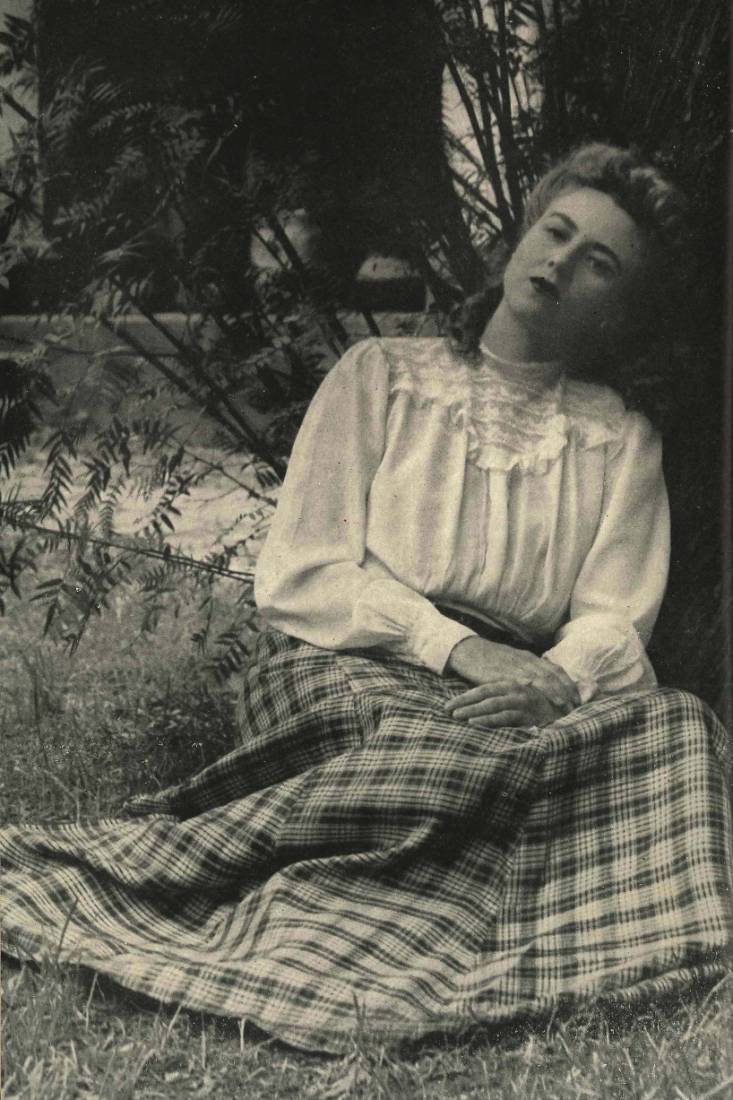 Ione Robinson is renowned mostly for having been a model to Diego Rivera (as «Continencia» in his monumental artwork «Salud y Vida») and to Tina Modotti. But her major lecacy is an epistolary novel which depicts mexican and US-american muralism and some of its protagonists lifely, and partly in little known aspects.
Robinson, born 1910 in Portland, Oregon, traveled to Mexico in 1929 to meet Diego Rivera, equipped by some recommendatory letters by George Biddle, who became initiator of the Public Works of Arts Projects in 1934, amongst others. Sie spent a most eventful summer there which should impress her for the rest of her life.
Rivera had already created some of his major works at that time, such as the cycles of the ministery of education and the decorations of the chapel of the agrarian university of Chapingo. In 1929 he started his works in the National Palace and in the Cortez Palace in Cuernavaca, which would alter his position in the movement of muralism and his reputation as a painter fundamentally. Longtime companions who helped him to realise these works were complemented by new ones, among them US-citizens like Pablo O'Higgins or Victor Arnautoff. The latter served later as intermediary and collaborator of Rivera in San Francisco and became coordinator of the largest PWAP project, the decoration of Coit-Tower in San Francisco. O'Higgins on the other hand played a central part in the realisation of the Mercado Abelardo Rodríguez decoration (starting in 1933), involving again several US-citizens.
At first Robinson assisted Rivera in his «Epopeya» project. We learn from her report that alongside to experienced fresco painters like Ramón Alva Guadarrama Rivera had several indian laborers at his disposition. Robinson probably helped to transmit the drafts and to execute larger uniform areas.
It was the photographer Tina Modotti who introduced Robinson into the social life of Mexico City. Modotti, who was married to Edward Weston and therefore mastered the english language offered the newcomer lodging and assistance. Through Modotti Robinson met David Alfaro Siqueiros, who crossed her ways in New York and Barcelona in later years and playes a major role in her cronicle. Siqueiros was just returning from Argentina spellbound large audiences with his «prophetic» appearance. To Siqueiros' entourage belonged young journalist Joseph Freeman from New York City who maintained Mexico's TASS agency. In spite of big gaps between the mindset of the communist Freeman and the middle-class molded but openminded Robinson they got allied and went into a (short-lived) marriage.
Two events moved Ione Robinson to leave Mexico after a few months. Her engagement as a nude model to Rivera's work in the ministery of health is said to have provoked Frieda Kahlo to burst of jealousy. At the same time Robinson's fiancé Freeman presided the tribunal for exclusion of Rivera from the communist party (on the occasion of accepting Dwight Morrow's commission for the decoration in Cuernavaca). Rivera blamed Robinson later of having promoted his exclusion.
Back in Los Angeles she exhibited drawings in the same year and tried to generate a mural commission of the Los Angeles Museum for Rivera, which though wasn't supported by the conservative board. A second (equally unhappy) marriage (with shipping magnate John Dallet) Robinson entered after splitting with Freeman brought her a life without material worries and the opportunity to travel to Europe, but excluded her of a direct participation in WPA projects, being neither in need nor artistically successful. Contributing as a volunteer and as a New York drop-in for her mexican aquaintances she nevertheless was connected to the muralist happenings in the USA. We owe extraordinary descriptions to her presence in Barcelona during the civil war which she documented drawing, taking photographs and writing. She also recorded the social athmosphere in Berlin under national socialist rule and noted impressions on Hermann Goering's representational architecture during a short visit in 1938 arranged by the american journalist Dorothy Oeschner. The cronicle ends on September 9th, 1939, expecting the permission to leave Le Havre, giving the account of an elderly Pole on Saint-Roch square wiping off one polish village after the other.