dieser beitrag wurde verfasst in: englisch (eng/en)
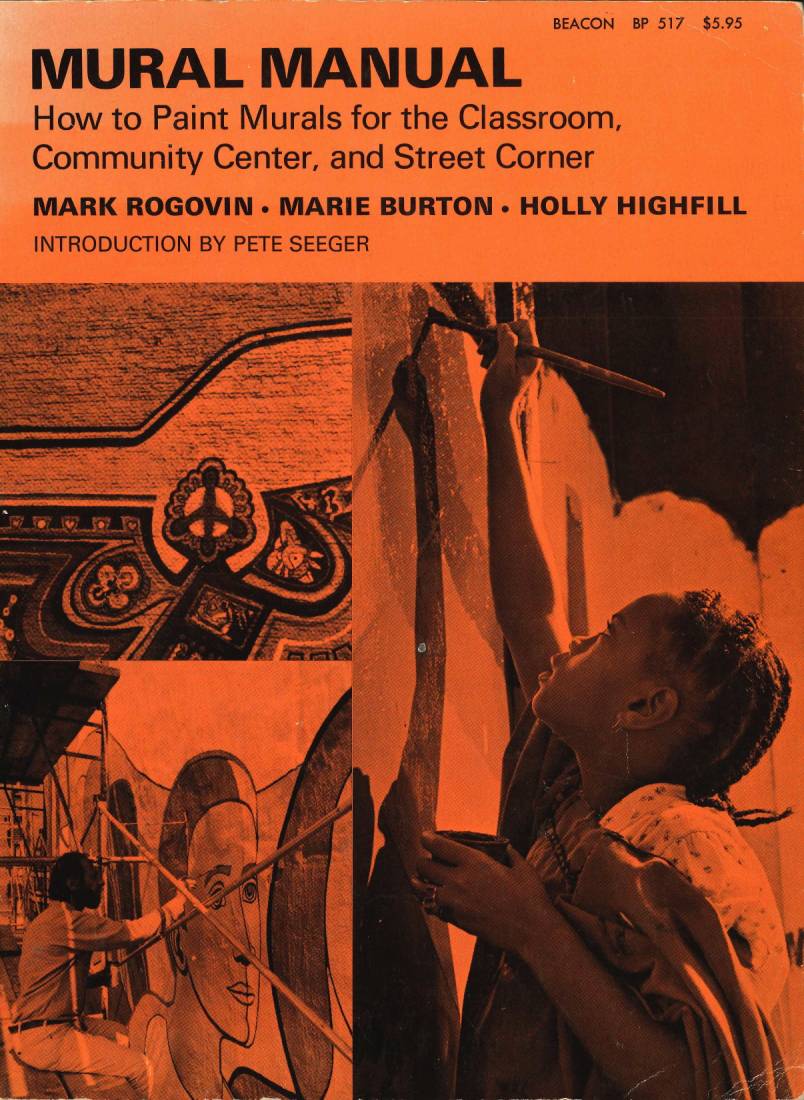
Reread: The «Mural Manual» by Mark Rogovin, Marie Burton, and Holly Highfill
Alex Winiger, 2018
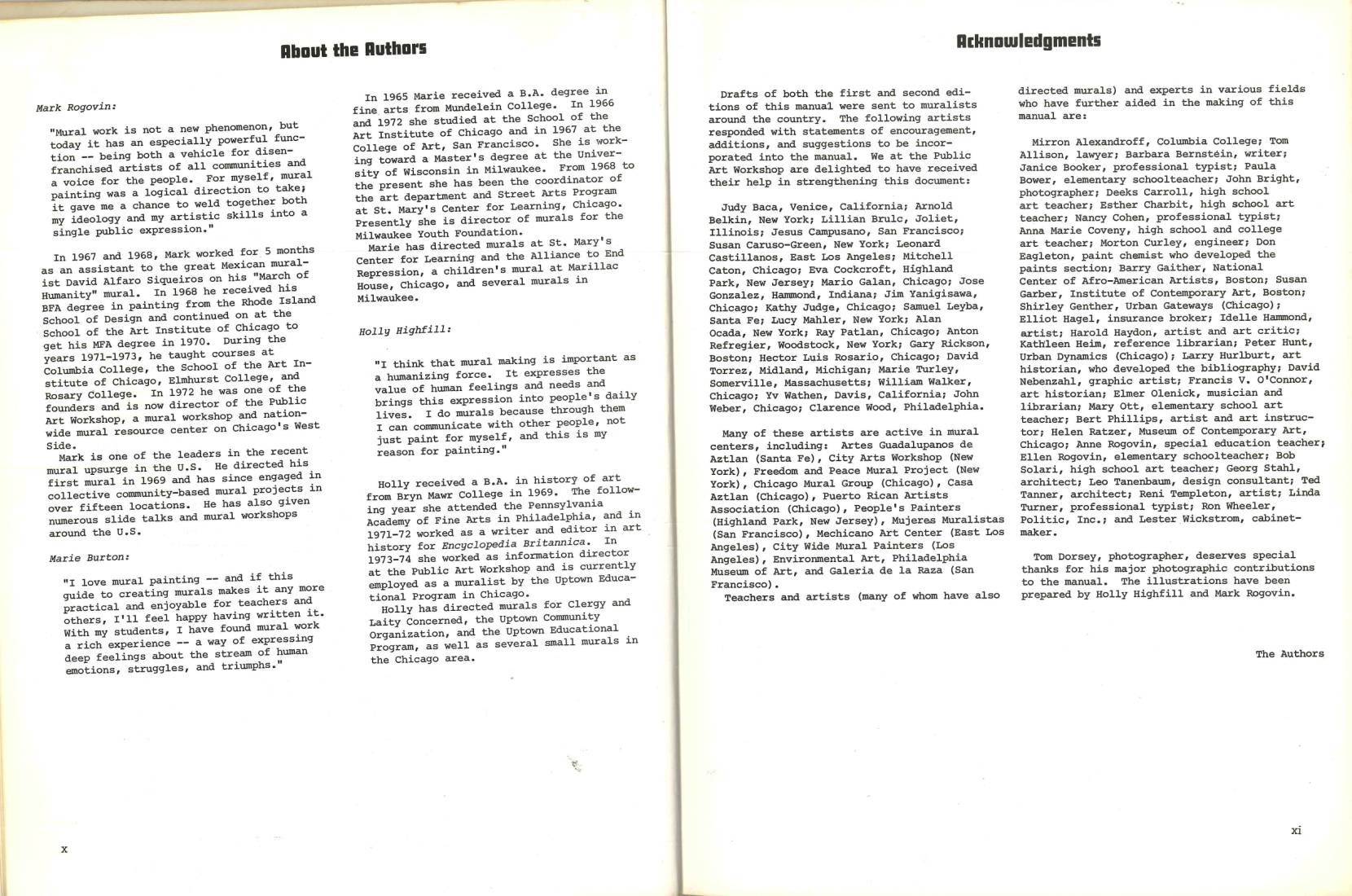
The Acknowledgments of this promising brochure contain the names of muralism concerned artists and experts in the United States by the beginning of the 1970s. This page alone is most instructive. There are three groups: the activists of the time, born around 1945 like the authors, who belong to what we call the generation of '68; experienced activists in their fifties, some of whom had fought for the civil rights (of the African American or the Hispanic), like William Walker; last, then always living veterans of the New Deal era like Anton Refregier. And one group is missing: the graffiti writers.
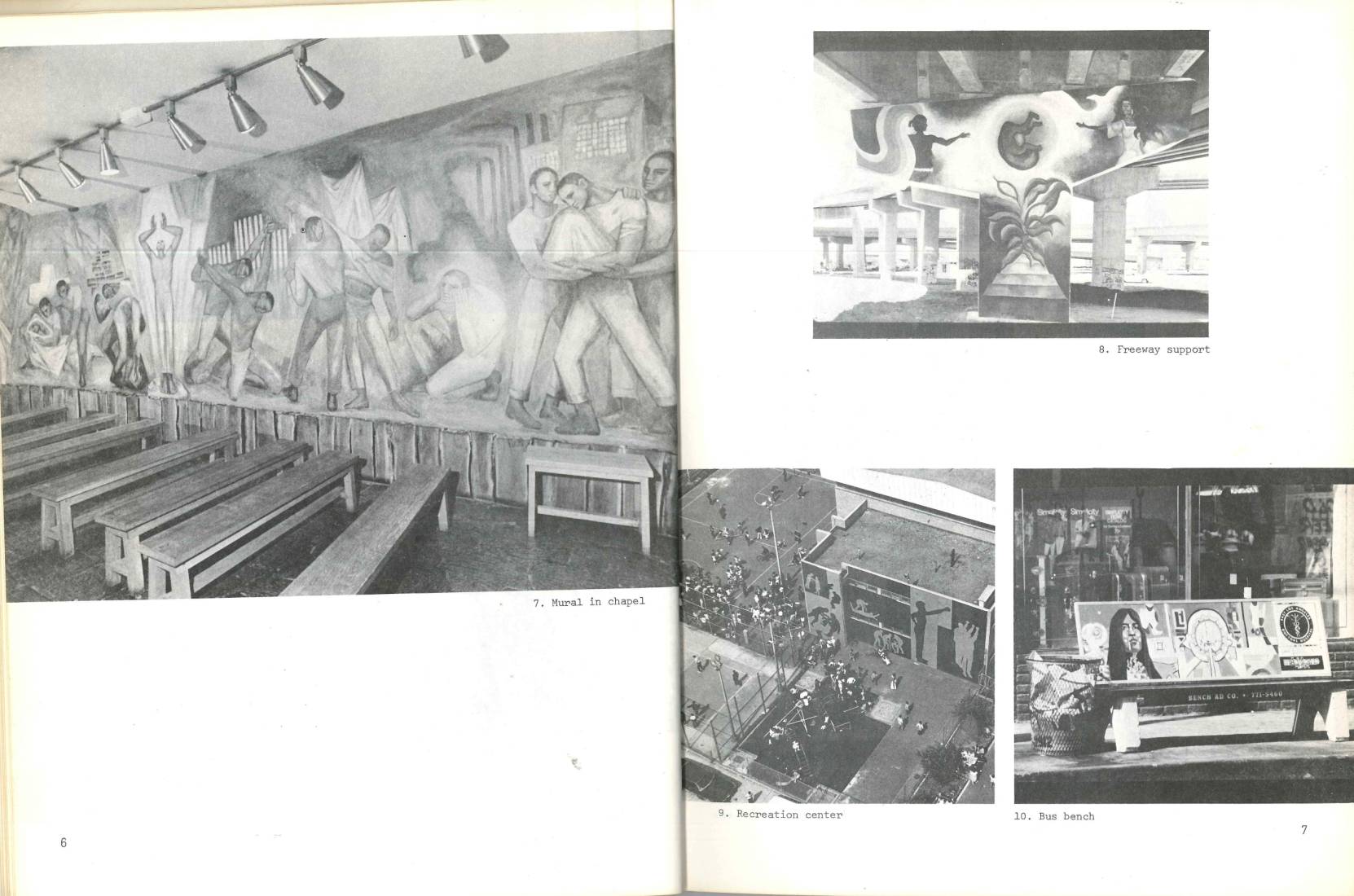
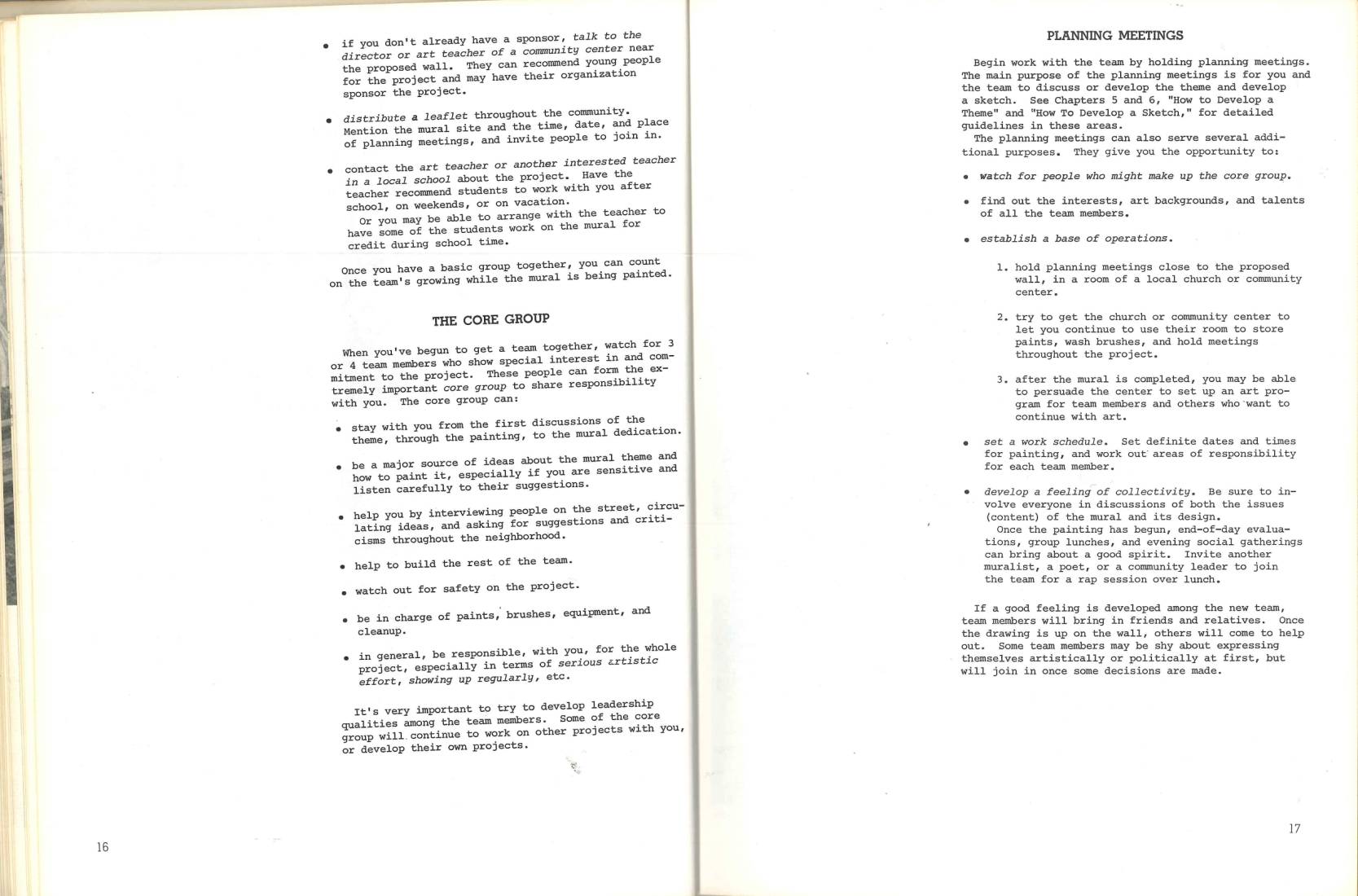
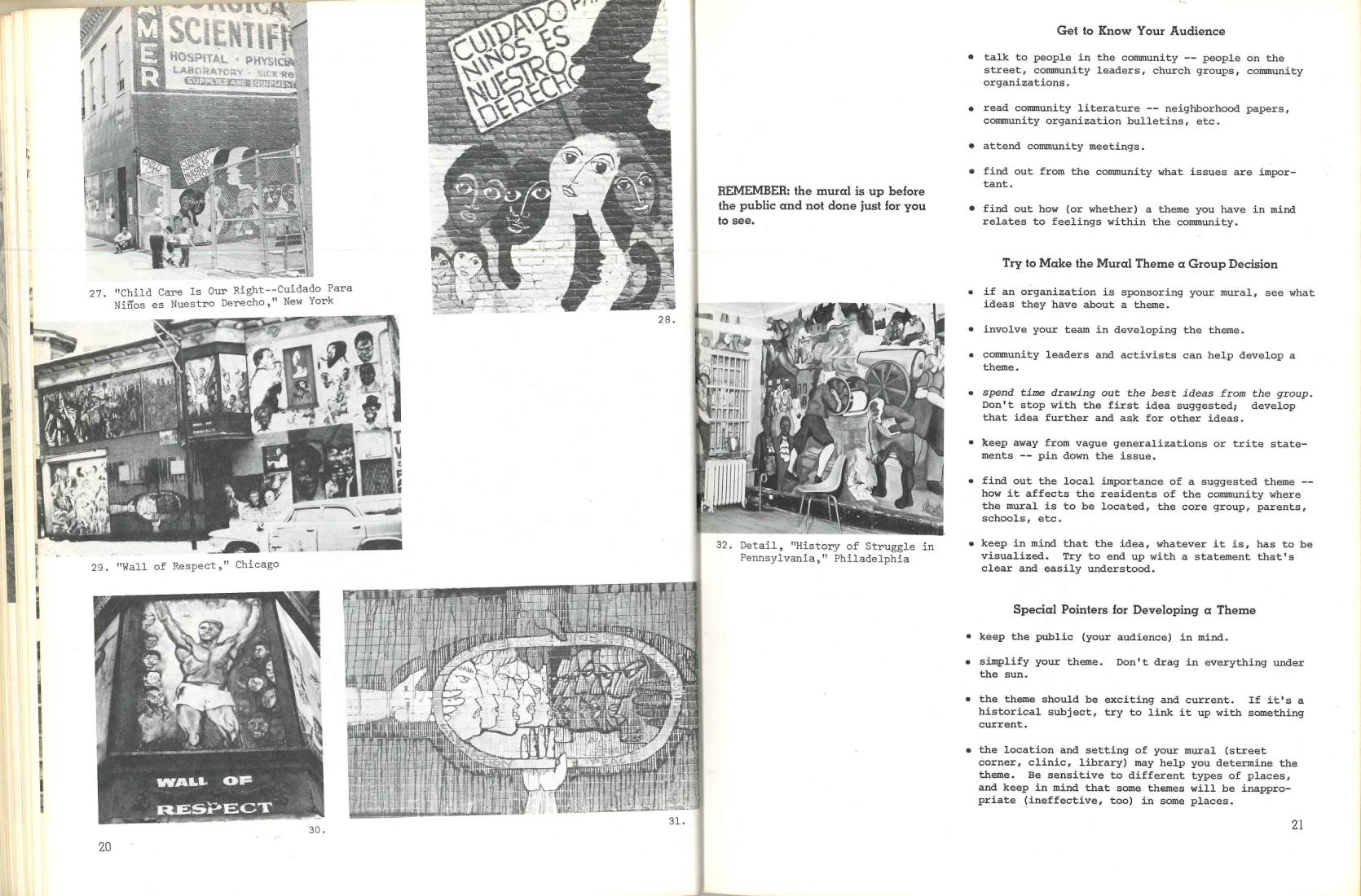
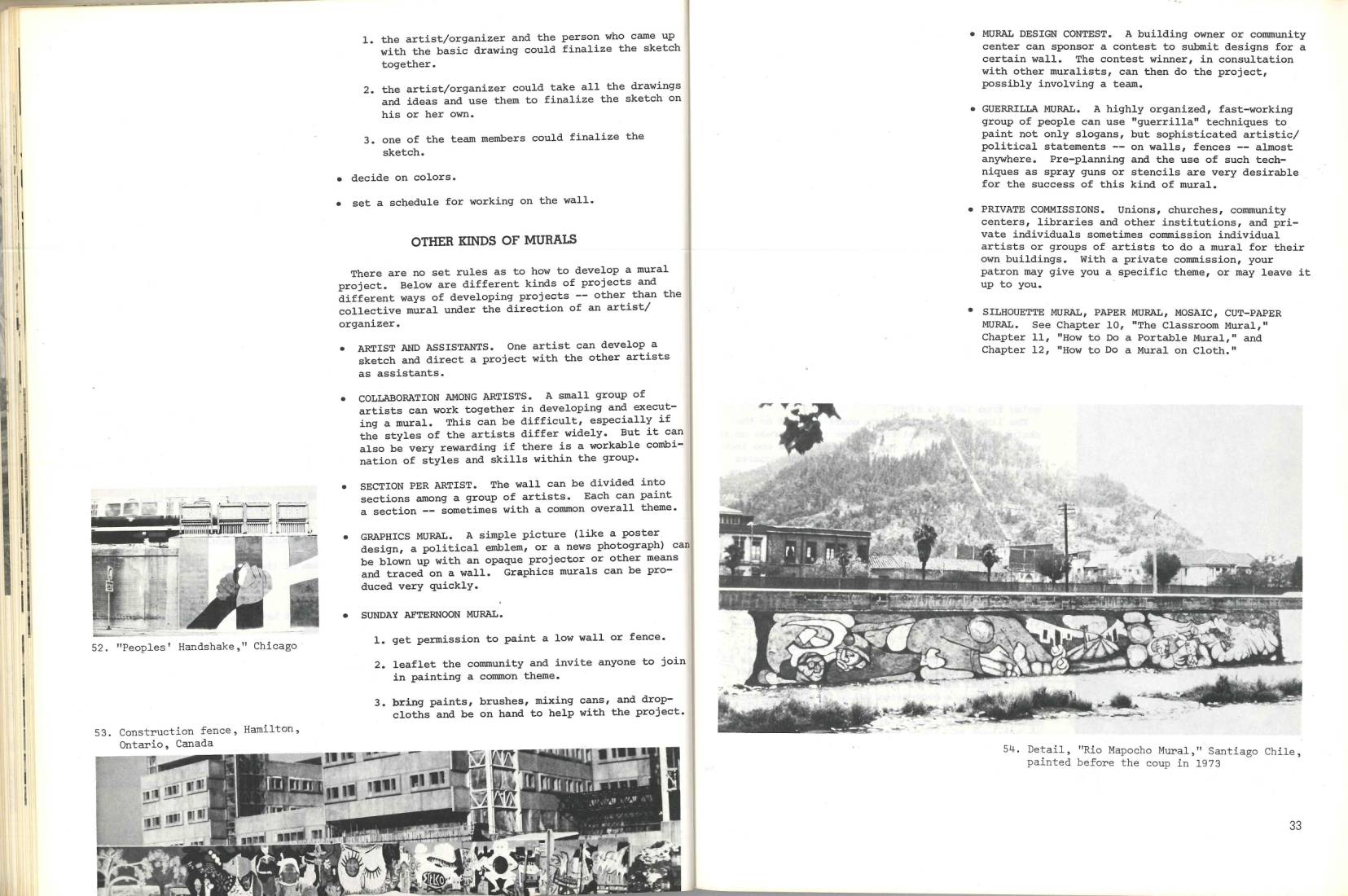
The brochure contains every ingredient of the political movements of the time: the political stance («solidarity with Chile», civil rights, resistance against oppression etc.), a participative concept, collective thinking and acting, working for the communities, work for destitutes, self-organization.
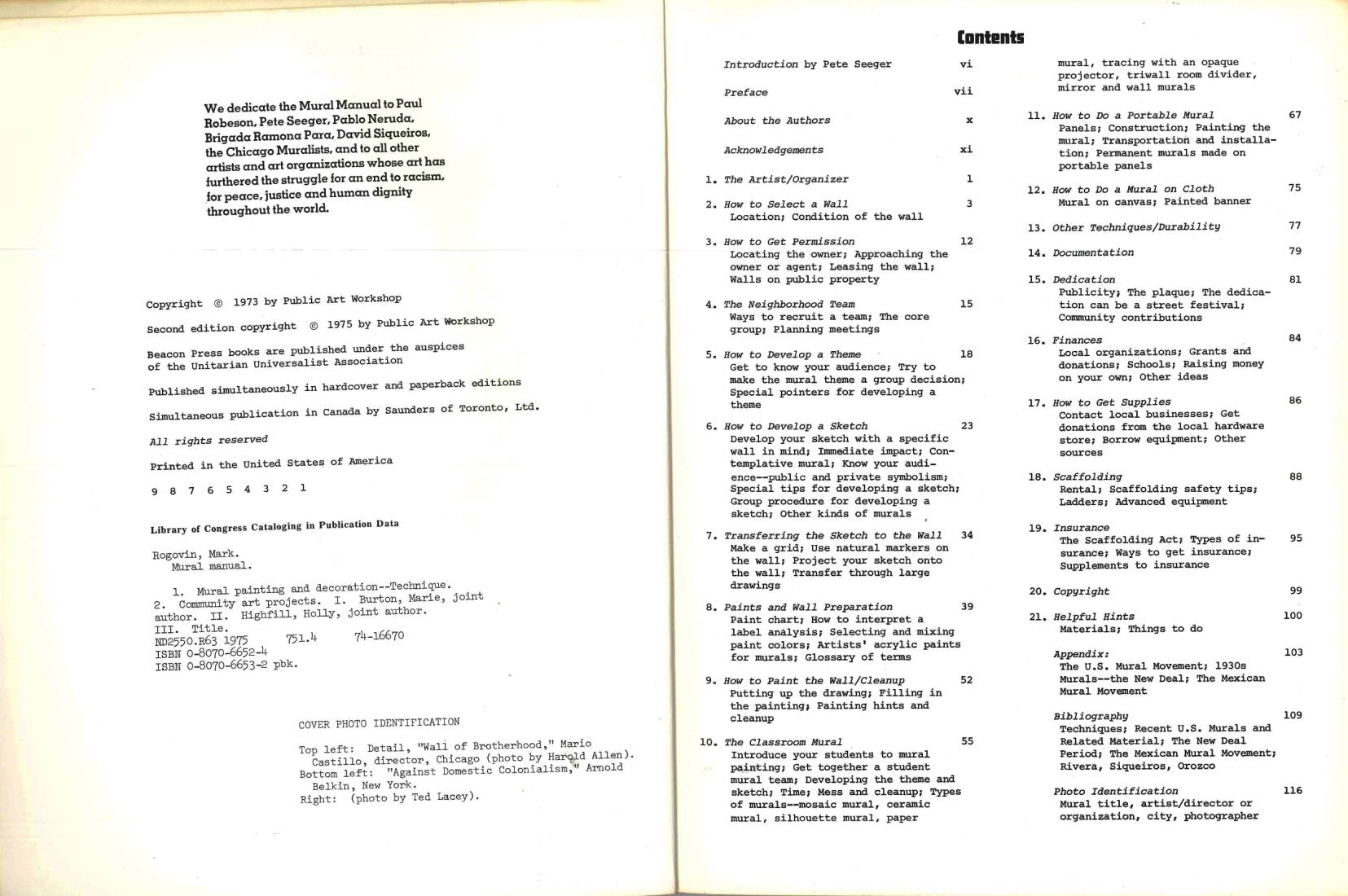
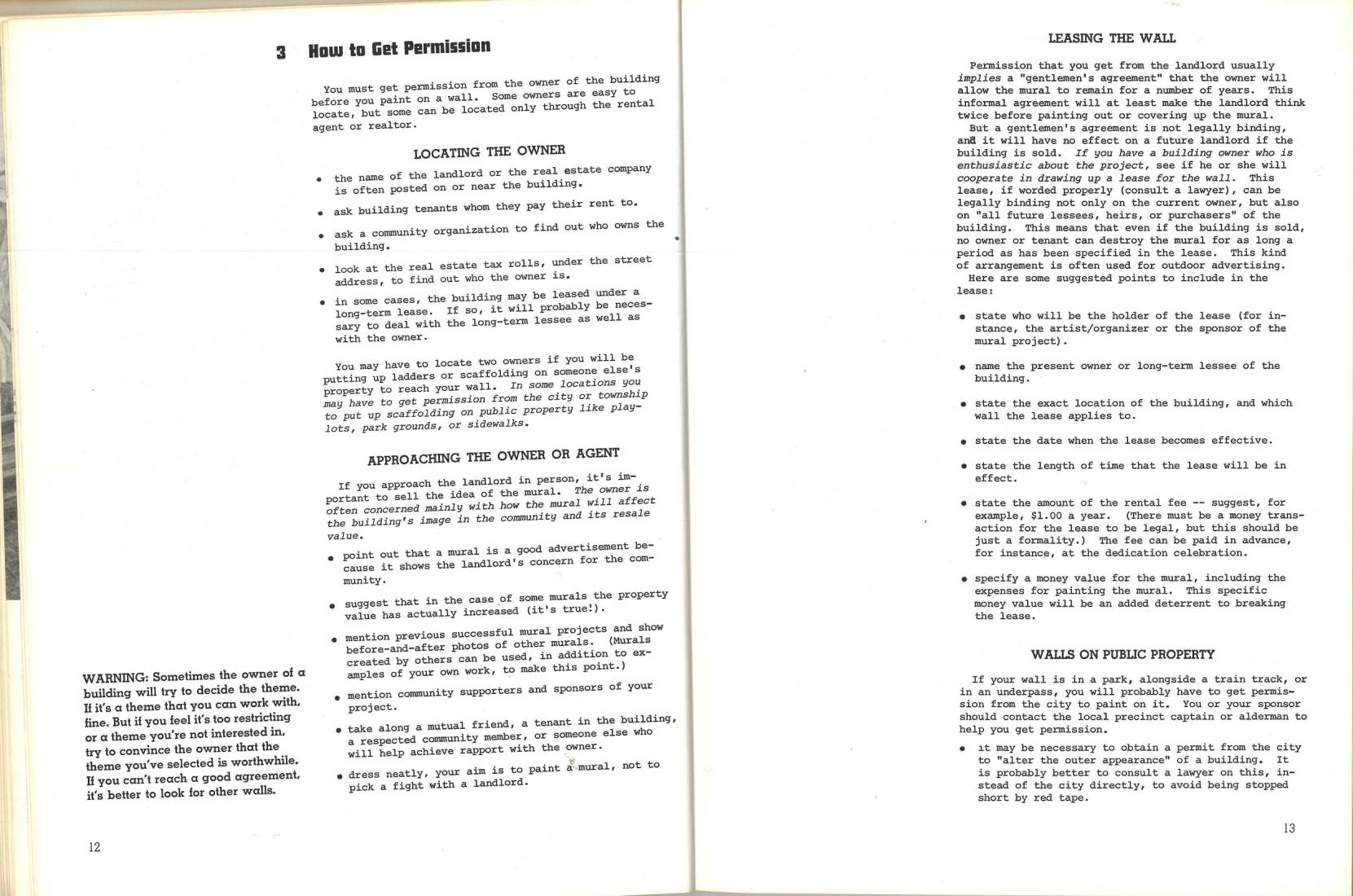
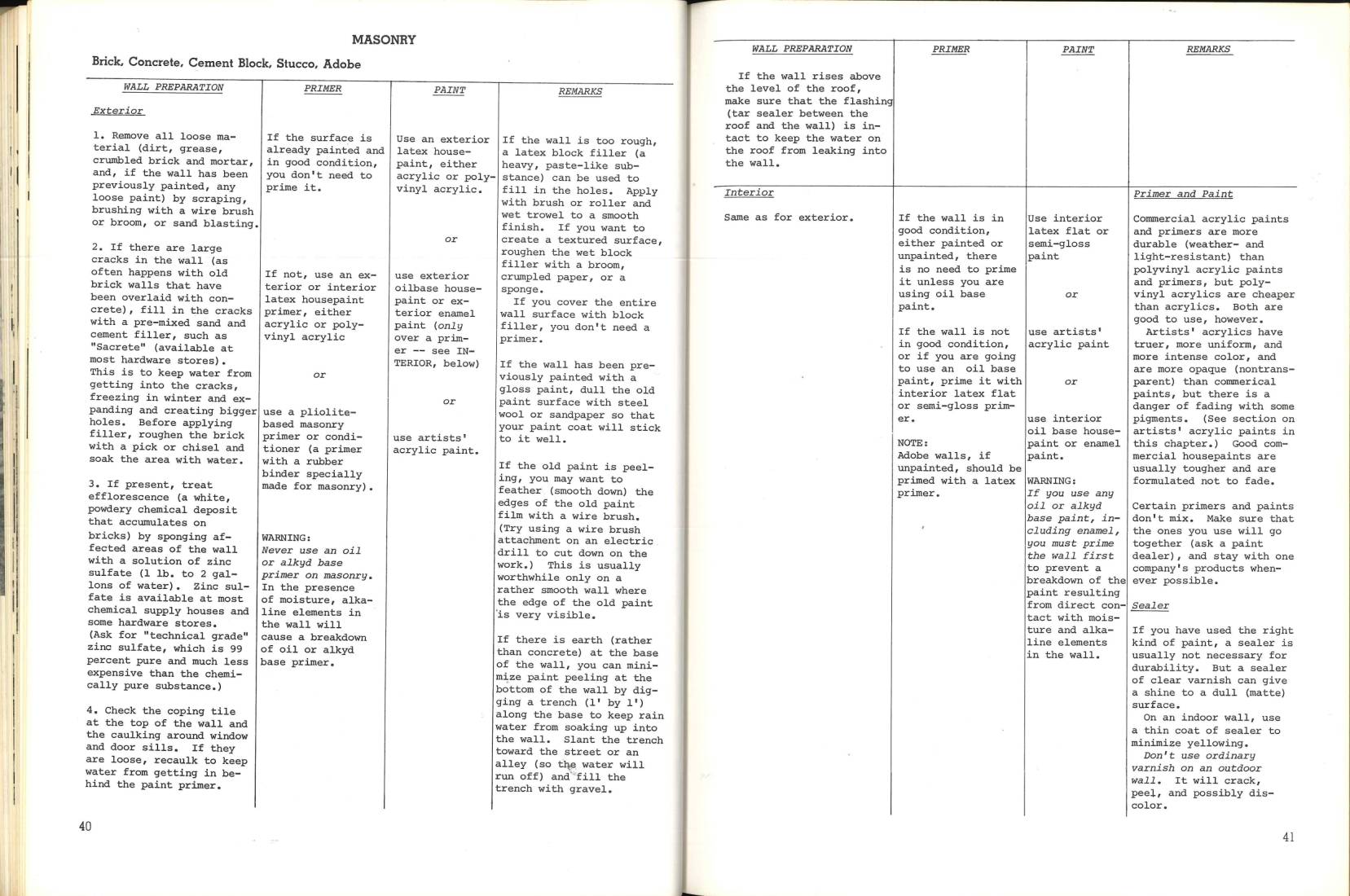
The manual touches, aside from the well-grounded technical advices, organizational, legal and financial questions. Not the least thought for example is, to set up a leasing contract on the used piece of wall (for a symbolic amount). It gives the creators of the mural a hold for the case of an owners change or of a construction projects. The suggestion to define a (monetary) value for the artwork set down in this contract fullfills two tasks: it restrains its destruction, and it lifts the self-esteem of the creators.
Corresponding Rogovin 14'000 copies of the manual were dealt, and many communities worked with them. Nevertheless, the great time of muralism as such was over by 1975. It had some updraft in the United Kingdom with the political movements of the 1980s, especially in Ulster. In the US it never died completely, supported also by administrations like schools, art percents etc. up to our time. But the new protagonists, the writers and later the street artists, already there since the end of the 1960s, would soon delevop a overwhelming presence, working secretly, rather in the gang than in the community and not mainly concerned with politics, but with representation and branding.
Yet, the book still offers useful instruction in 2018. Don't push a rolling scaffold alone. Generally: don't work alone at all.